
Choosing an Abhyanga session requires more than searching for a nearby oil massage: you need to know what the treatment includes, how the oil and pressure are selected, and when massage is unsafe. By the end, you can compare local providers, prepare for the session, and decide whether this traditional wellness practice fits your needs.
Key takeaways
- Ask how the practitioner selects your oil, pressure, treatment areas, and session length.
- Confirm privacy, draping, washing arrangements, and slip prevention before treatment begins.
- Tell the practitioner about pregnancy, skin problems, injuries, fever, or ongoing medical treatment.
- Choose a provider who explains expected benefits without promising to cure disease.
What Abhyanga Means—and How It Differs from Other Massages
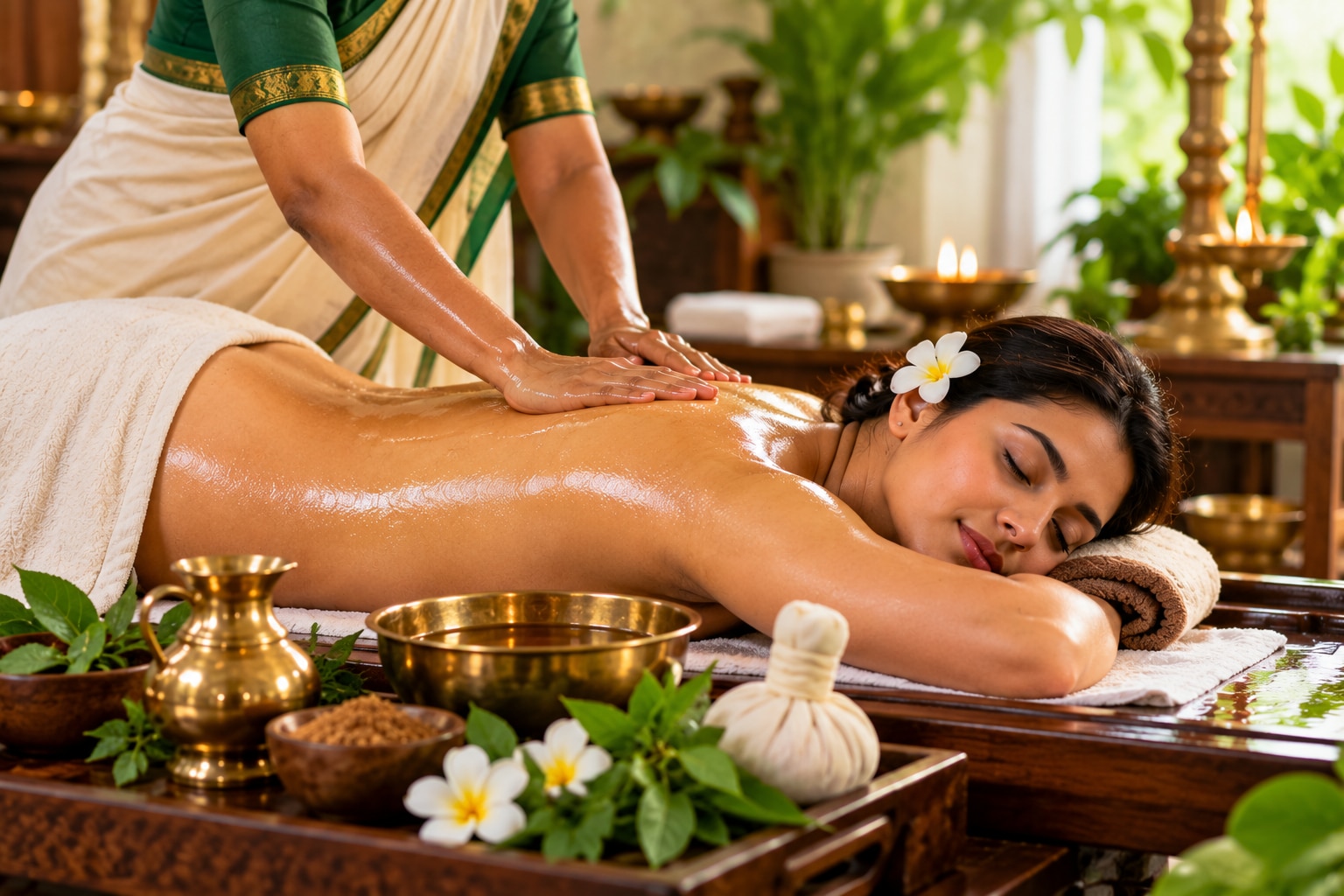
Abhyanga is an Ayurvedic oil-application and massage procedure, not one fixed sequence of strokes. The practitioner chooses the oil, pressure, treatment areas, duration, and stroke direction after considering your Ayurvedic assessment and treatment goal. Substantial oil remains on the skin, so draping, privacy, washing, and slip prevention are part of the service.
| Approach | What makes it different | Main purpose |
|---|---|---|
| Abhyanga | Individualized oil, pressure, areas, and pace; oil is deliberately left on the body | Ayurvedic wellness and relaxation |
| Ordinary oil massage | Oil reduces friction, but the method may not include an Ayurvedic assessment or treatment plan | General massage comfort |
| Swedish massage | Uses gliding, kneading, and rhythmic strokes, usually with lighter oil or lotion | Relaxation and muscle comfort |
| Deep-tissue massage | Uses slower, firmer pressure on selected muscles and connective tissue | Focused muscle tension relief |
| Spa treatment | May combine massage with bathing, scents, music, or beauty services | Leisure and sensory relaxation |
A spa can offer Abhyanga, but “spa treatment” describes the setting, not the method. Likewise, an Ayurvedic oil massage is not automatically Abhyanga; ask whether the provider adapts the session rather than applying the same oil and routine to everyone.
For abhyanga massage in Greater Noida West, ask for the oil’s name and ingredients, how its temperature is tested, and whether an Ayurvedic physician is involved when the service is presented as treatment. Disclose pregnancy, surgery, diabetes, neuropathy, bleeding disorders, anticoagulant use, or heart and kidney disease before booking.
What Happens During a Typical Abhyanga Session
Expect the appointment to begin with a short consultation, not oil application. Tell the practitioner about pregnancy, recent surgery or fractures, bleeding disorders, anticoagulant medicines, neuropathy, diabetes, uncontrolled blood pressure, cancer treatment, and heart or kidney disease. Ask whether an Ayurvedic physician reviews treatment decisions when the service is advertised as therapy.
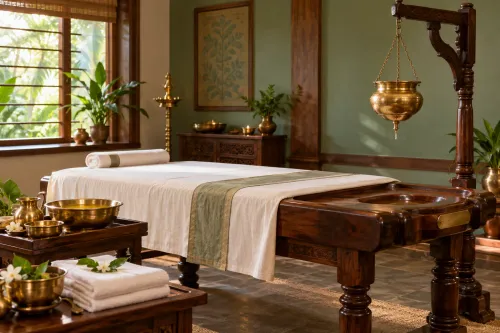
Before you undress, confirm the oil’s name, ingredients, intended temperature, treatment areas, duration, and how privacy will be maintained. The room should have clean linens, secure draping, a stable massage table, and a clear plan for wiping or washing oil afterward.
A typical sequence is:
- You change privately and lie face down or face up under draping, exposing only the area being treated.
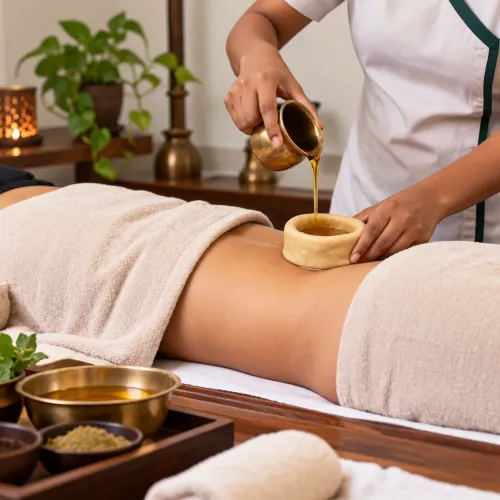
- The practitioner applies warmed oil and uses a planned pattern of strokes, pressure, and positioning. The scalp, face, abdomen, joints, or feet are not automatically included; request a limited-area session if preferred.
- After the massage, excess oil is wiped away or you use a warm shower, depending on the clinic’s arrangement.
- You rest quietly for a short period before dressing, drinking fluids, and standing slowly.
Oil on the soles can make floors and bathroom surfaces slippery, so ask for foot wiping and non-slip footwear. If you are searching for ayurvedic abhyanga massage near me, confirm these details before booking rather than relying on the word “Panchakarma”; one massage alone is not a Panchakarma program.
Which Body Areas, Oils, and Temperatures Are Used?
Treatment areas are chosen for your goal, comfort, skin condition, and medical history—not automatically as a full-body service. You can request feet and legs only, back and shoulders, scalp, face, abdomen, joints, or another defined area; breast, gluteal, and genital boundaries must be agreed before draping.
| Oil | Why a practitioner may choose it | What to check |
|---|---|---|
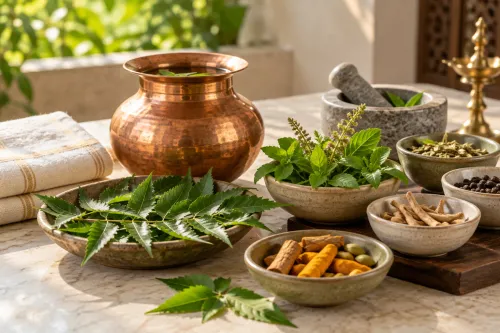
| Sesame | A traditional base for a warming, nourishing application | Ask about allergy, skin irritation, and whether it suits the season and your skin |
| Coconut | A lighter-feeling option for heat-sensitive or dry-feeling skin | Confirm it will not aggravate sensitivity or leave floors dangerously slippery |
| Castor | A thicker oil used for selected local applications | Ask why it is needed; it is not automatically suitable for a full-body session |
| Medicated oil | A named herbal formulation selected for a specific Ayurvedic assessment | Request the product name, ingredients, batch details, and intended use |
Oil should feel comfortably warm, not hot. The practitioner should test it before application and lower the temperature for reduced sensation, impaired circulation, damaged skin, diabetes-related neuropathy, or fragile skin. Pressure follows tenderness, muscle condition, age, pregnancy, recent surgery, fractures, bleeding risk, anticoagulant use, and blood-pressure or heart problems.
A session may be shortened or limited to one area when fatigue, dizziness, pain, or skin reaction appears. Ask for a stop signal and leave enough time to wash oil from your feet before walking. For ayurvedic oil massage in greater noida west, confirm these choices during the consultation rather than accepting a fixed package.
What Abhyanga Can and Cannot Do for Your Wellness
Expect short-term relaxation, easier movement from reduced muscle tension, and temporary relief of some aches—not a cure for disease. If you are comparing abhyanga therapy Greater Noida options, treat promises of permanent health change as a warning sign.
| Claim | What the evidence supports | Sensible expectation |
|---|---|---|
| Relaxation and stress relief | Massage can produce short-term calming effects | You may feel more settled after a session |
| Muscle tightness or mild aches | Relief can occur, but results vary and may not last | Temporary comfort, not correction of the underlying cause |
| “Detox,” permanent dosha balance, or disease treatment | These claims remain traditional or weakly supported by high-quality clinical research | Do not use them to judge medical effectiveness |
| Panchakarma branding | The word does not prove safety or quality; some programs include purgation or emesis | Never agree to such procedures solely because massage is advertised |
Abhyanga should complement—not replace—diagnosis and prescribed treatment. Seek medical assessment for persistent pain, numbness, weakness, fever, unexplained weight loss, breathing trouble, or symptoms that worsen.
Postpone the session and ask a clinician before proceeding if you have an acute infection, open wound, contagious skin condition, recent surgery, suspected blood clot, or another condition affected by pressure or heat. Tell the practitioner about pregnancy, medicines, allergies, and chronic illness.
Do not accept vague “special therapy,” genital contact, or internal Ayurvedic products without clear consent and medical oversight. Some Ayurvedic products have raised heavy-metal contamination concerns. A massage cannot make those risks disappear.
How to Choose a Safe Abhyanga Provider in Greater Noida West
Before booking abhyanga massage in greater noida west, ask who will perform it, what training they hold, and whether an Ayurvedic physician reviews treatment decisions. A massage certificate alone does not establish medical expertise.
Use this screening checklist:
- Ask for the practitioner’s name, Ayurveda qualification or massage-training certificate, and the physician’s role if the service is advertised as treatment.
- Disclose pregnancy, recent surgery, fractures, bleeding disorders, anticoagulant use, neuropathy, diabetes, uncontrolled blood pressure, cancer treatment, and heart or kidney disease.
- Ask which oil will be used, its ingredients, intended temperature, and whether you can choose a fragrance-free or limited-area option.
- Check that fresh linens, cleaned surfaces, hand hygiene, covered equipment, private draping, and slip-resistant floor mats are standard.
- Confirm that you can refuse an area, change pressure, pause the session, or stop without argument.
- Ask how the clinic handles dizziness, burns, allergic reactions, falls, or sudden illness, including access to first aid and emergency transport.
Searching for ayurvedic abhyanga massage near me? Compare the provider’s actual setup, not the word Panchakarma. Panchakarma is a broader program that can include monitored diet, rest, purgation, or emesis; its use in advertising does not prove quality.
| Provider type | Strength | Verify before booking |
|---|---|---|
| Spa or studio | Relaxation focus | Training, hygiene, emergency plan |
| Ayurvedic clinic | Individual assessment | Physician involvement and documented contraindication screening |
| Physician-led clinic | Medical decision support | Scope of care and referral plan |
Kairavam Ayurveda may be useful when a physician-led decision is needed for complex symptoms, chronic illness, or uncertainty about whether massage is appropriate.
Related services
Ayurveda & Panchakarma Abhyanga (अभ्यंग) At Kairavam Ayurveda, Abhyanga (अभ्यंग) is offered as part of our Ayurveda-focused therapy range. |
Ayurveda & Panchakarma Padabhyanga (पादाभ्यंग) At Kairavam Ayurveda, Padabhyanga (पादाभ्यंग) is offered as part of our Ayurveda-focused therapy range. |
Frequently asked questions
How does Abhyanga differ from a regular massage?
Abhyanga is an Ayurvedic oil-application and massage procedure. The practitioner adapts the oil, pressure, treatment areas, duration, and stroke direction to your assessment and treatment goal rather than following one fixed sequence.
What happens during an Abhyanga session?
The practitioner discusses your health and goal, selects an oil and treatment approach, applies substantial oil to the skin, performs the massage with planned pressure and strokes, and explains washing and aftercare.
Which body areas and oils are used for Abhyanga?
The treated areas and oil depend on your assessment and treatment goal. Ask which oil will be used, whether it will be warmed, and why that choice suits your session.
How can I choose a safe Abhyanga provider in Greater Noida West?
Choose a provider who takes a health history, explains the oil and technique, protects privacy with proper draping, discusses situations requiring caution, and provides a clean space with safe washing and slip-prevention arrangements.